Many Massachusetts homes lose heat through small attic air leaks around recessed lights, bath fans,…

Does Cellulose Insulation Need a Vapor Barrier in a Massachusetts Home?
Cellulose insulation does not automatically require a new plastic vapor barrier. The right approach depends on where the insulation is installed, which materials are already present, and how the wall or attic can dry if moisture gets in. For an existing Massachusetts home, the decision starts with the complete construction of that space.
If you are considering an insulation upgrade, Rogers Insulation in Framingham can help you review your home’s existing conditions and discuss the work it needs.
An open attic above a Natick ranch and the closed walls of an older Newton Colonial may both benefit from cellulose, but they need different moisture-control plans. Understanding that distinction can help you evaluate a contractor’s recommendation before work begins.
Insulation, Air Sealing, and Vapor Retarders Do Different Jobs
As the U.S. Department of Energy explains in its guidance on air barriers and vapor barriers, these layers serve different purposes. Insulation slows heat transfer. Air sealing closes gaps through which air can move. A vapor retarder slows the passage of water vapor through materials, even where you cannot feel a draft.
These functions work together, but they are not interchangeable. Moist indoor air can escape through a gap around a pipe or attic hatch. Water vapor can also move gradually through building materials, a process called diffusion. Sealing the gap addresses the first route; selecting an appropriate vapor-control layer addresses the second.
The term vapor barrier generally describes a material that strongly restricts vapor movement, such as polyethylene plastic. Vapor retarder is the broader term and includes materials that allow different amounts of vapor to pass. Certain coatings, insulation facings, and membranes provide vapor resistance without behaving like a sheet of plastic.
Cellulose is a fiber insulation. Packing it into a wall can reduce air movement within the cavity, but it does not replace a continuous air barrier or a separately evaluated vapor-control strategy.
Why Massachusetts Homes Need to Manage Moisture in Both Seasons
During a Massachusetts winter, normal activities such as cooking and showering add moisture to indoor air. If that moisture reaches sufficiently cold roof boards or wall sheathing, it can condense into water. Frost in an attic is one visible example, although moisture inside a wall may remain hidden.
Air leaks can carry substantial moisture into those cold spaces. That is one reason an insulation upgrade should include attention to hidden gaps rather than relying on the insulation alone.
Summer creates a different challenge. MetroWest homes also experience humid weather and air conditioning. Depending on conditions, water vapor can move inward toward cooler interior materials. A layer chosen only to restrict outward moisture movement in January may also limit drying during warmer weather.
Building America’s guidance on condensation control emphasizes that a durable wall needs both protection from wetting and an appropriate way to dry. The same principle matters in an attic. That does not mean deliberately leaving air leaks. Controlled drying through suitable materials and uncontrolled drafts are different things.
Does a Vented Attic Need Plastic Beneath the Cellulose?
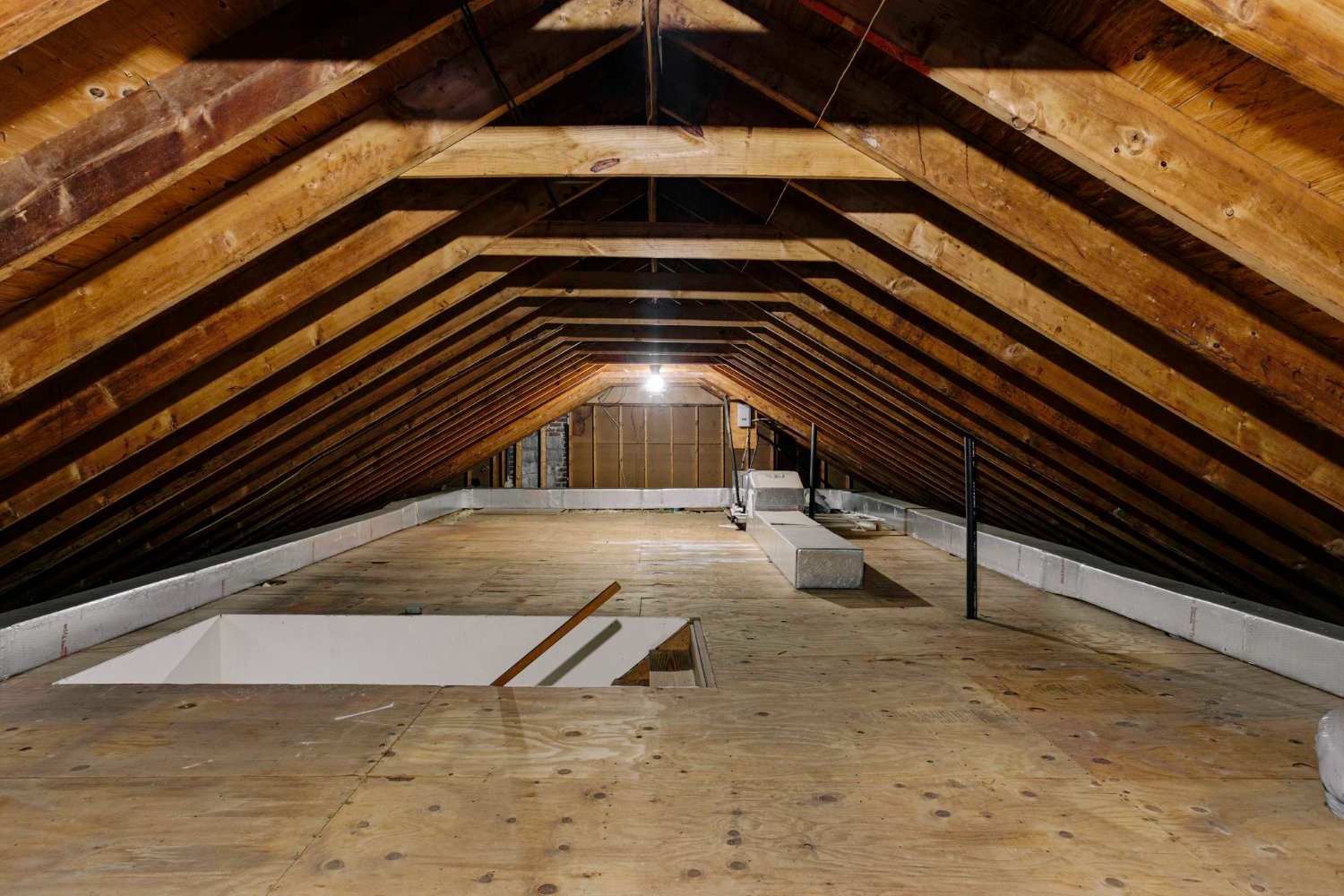
In a conventional vented attic, the insulation lies on the attic floor, above the ceiling of the rooms below. The roof space remains outside the heated and cooled living area.
Start by checking roof leaks, bathroom exhaust, ceiling air leaks, and attic ventilation. Seal gaps at pipes, wiring, partition walls, and the attic hatch before insulation covers them. Where soffit vents exist, baffles should keep their airflow paths clear.
Adding plastic is not automatically part of that work. DOE’s guidance for insulating existing vented attics advises avoiding highly restrictive Class I vapor barriers in these assemblies in Climate Zone 5 and below because condensation can occur during summer air-conditioning conditions. MetroWest is in Climate Zone 5A. This is building-science guidance, not a statement that every existing plastic layer violates code.
Spreading plastic over existing insulation does not replace ceiling air sealing. Evaluate any existing membrane or insulation facing before altering it.
Finished roof slopes, cathedral ceilings, and unvented roofs require a different assessment. Advice for an open, vented attic should not be transferred to those spaces without examining their construction. If you already see attic moisture or mold, identify its source before planning additional insulation or a new membrane.
What Changes When Cellulose Is Added to Existing Walls?
An older wall may contain plaster, several coats of paint, wood sheathing, building paper, and siding installed or changed over many decades. Those layers affect both moisture entry and drying. With dense-pack wall insulation, filling the cavity does not tell you, by itself, whether a new vapor retarder is needed.
Before recommending dense-pack cellulose, the contractor should evaluate the existing insulation, air-leakage paths, siding and flashing conditions, and signs of dampness or deterioration. Materials that strongly restrict drying on either side of the wall deserve particular attention. Building America’s guidance for insulating existing wall cavities makes the overall assembly central to this decision.
Massachusetts currently uses the tenth edition of its building code, incorporating the 2021 International Residential Code with state amendments. The IRC’s framed-wall vapor-retarder provisions recognize several options. In Climate Zone 5, a Class III layer, which can include qualifying painted finishes, is permitted under specified exterior-construction conditions. Polyethylene is therefore not the only possible approach.
That does not mean any painted wall automatically qualifies. The finish, exterior layers, project scope, and applicable requirements must be checked. Adding insulation through small holes in a closed wall also differs from opening and rebuilding the wall; the compliance approach should reflect the work actually proposed.
Can an Additional Vapor Barrier Make Moisture Problems Worse?
It can, if it restricts a drying path the wall needs. For example, a wall with a highly vapor-resistant exterior layer needs careful evaluation before another highly resistant layer is added inside. Such combinations require a suitable design; adding layers without considering their interaction can leave moisture-sensitive materials with limited drying capacity.
The same distinction applies to leaks. A vapor retarder controls vapor diffusion. It does not repair water entering around a window, leaking roof flashing, or a plumbing connection. Those sources need correction before insulation is installed.
As Pacific Northwest National Laboratory explains in its guidance on home insulation retrofits, fiber insulation can hold moisture, reducing its insulating value and creating conditions that can damage surrounding materials. Cellulose should not be treated as waterproof. Water management, air control, and appropriate wall design help keep it dry.
If you find damp insulation or suspect that existing layers are trapping moisture, have the assembly evaluated. Do not add, cut, or remove a membrane based solely on a general recommendation for another house.
What Should Your Contractor Explain Before Work Begins?
A useful recommendation should identify where the insulation will go, how air leakage will be controlled, and which existing layers affect moisture movement. If an additional vapor retarder is proposed, the contractor should explain what it is intended to accomplish and why it belongs in that location.
Three questions can make the discussion clearer: What moisture problem are we trying to prevent? What materials are already present? How will this wall or attic dry if moisture gets in?
The answer should follow the applicable code, the material manufacturer’s instructions, and the actual construction of your home. If leaks, damp framing or insulation, or damaged materials are found, the proposal should explain how those conditions will be addressed before they are covered.
Start With Your Home’s Construction
Cellulose can be part of an effective, durable insulation upgrade. Whether a separate vapor-control layer is appropriate depends on the wall or attic surrounding it. A well-planned project considers heat loss, air leakage, moisture entry, and drying together.
Rogers Insulation helps homeowners in Framingham, Natick, Newton, and surrounding MetroWest communities evaluate insulation and air-sealing improvements. To discuss your home and the appropriate next step, call (508) 875-3700 or contact our Framingham office. We can also help you review the Mass Save insulation and air-sealing pathway that may apply to your project.
Related Posts